Real double-entry books, never stale
General ledger, trial balance, balance sheet, income statement and cash flow, computed from the same records that reconcile your statements. Opening a report re-checks the books first, so the numbers cannot lag what you entered.
Full product, no feature tiers. Every new account is approved personally.
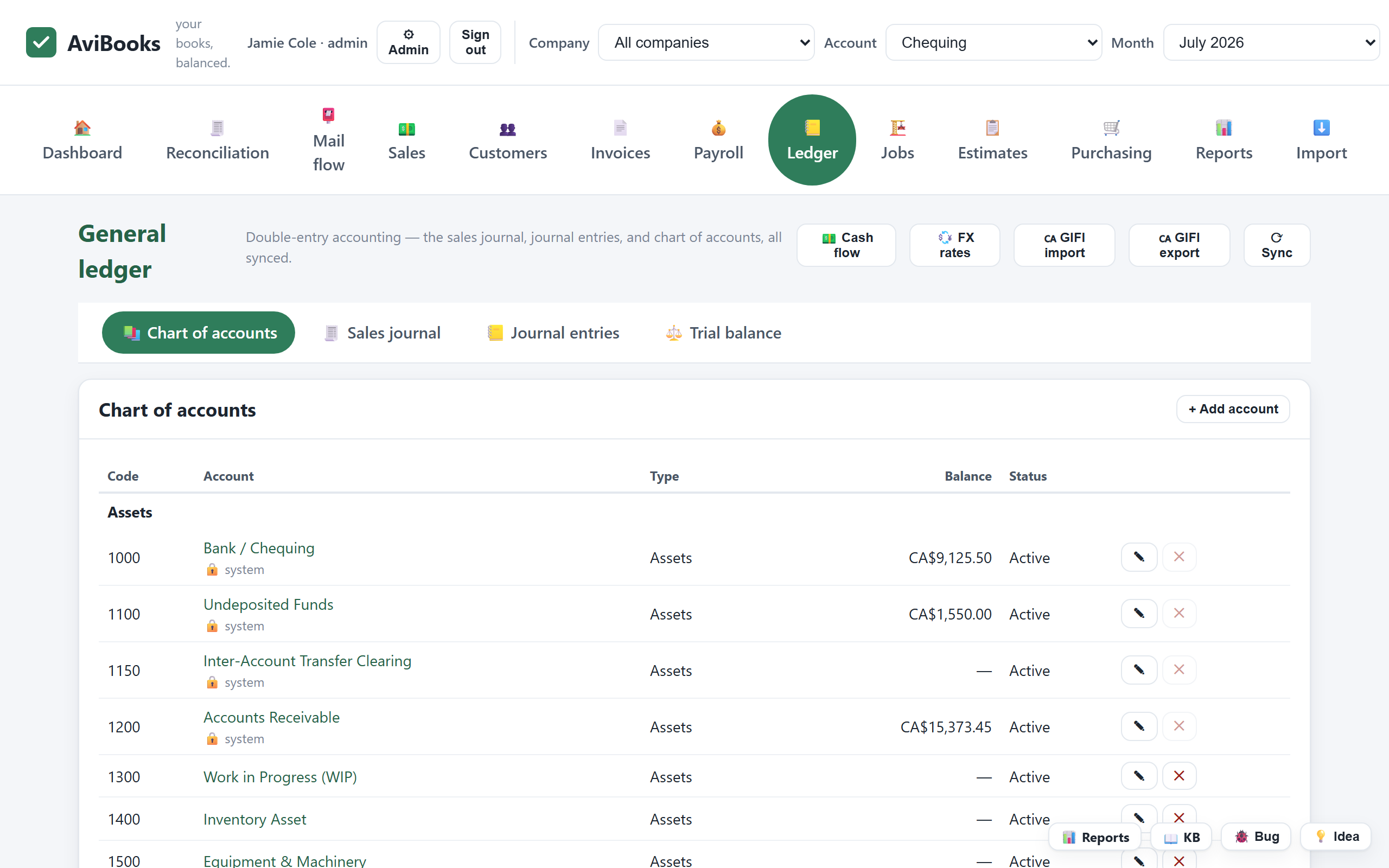
One ledger under everything
Invoices, bills, payments, bank loads and matched receipts post themselves: receivables, revenue, tax payable and the bank side, balanced to the cent. There is no separate accounting step to forget, and no export to a spreadsheet to build a statement.
- General ledger and journal
- Trial balance that ties
- Balance sheet and income statement, with monthly columns on request
- Cash flow and receivables aging
See the cash before it moves
The dashboard turns open invoices and bills into a 90-day picture: overdue, then 30, 60 and 90 days ahead, per company. Aging bars per customer show who is slipping, and any figure drills into the invoices behind it. No spreadsheet; it is computed from the books you already keep.
GIFI both ways, and a CRA remittance report
Import GIFI (.gfi) files into the books and export them back out for your T2 software at year-end. The tax remittance report shows net GST, HST, PST, QST and RST collected versus paid, per authority, whenever you open it.
Exports your accountant can use
An annotated Excel workbook with categories and types, or the same with every matched receipt embedded on its own sheet. An IIF general journal for desktop accounting software, CSV for Caseware and TaxCycle, or a plain debit and credit file for anything else. Every line carries its category as the offsetting account, so the first import only needs a mapping to your chart of accounts.
Several companies, one login
Keep more than one set of books. The dashboard shows a card per company with its balances and forecast, and every report, remittance and month-end close runs per company.
Questions about the books
Do reports update automatically?
Yes. Opening any report re-checks the books first: invoices, bills, payments and bank loads post themselves the moment a report reads the ledger.
Which year-end formats are supported?
GIFI (.gfi) both ways, an IIF general journal, CSV for Caseware and TaxCycle, and a generic debit and credit CSV.
Can I export to Excel?
Yes. Annotated workbooks with categories, and a version with each matched receipt embedded so it works offline.
Run three real month-ends on us.
The full product for 90 days. Import your existing books and see for yourself.